
Karex, the Malaysian company that makes roughly one in five of the world's condoms -- about five billion a year, supplying Durex and Trojan among others -- announced this week that it is raising prices by up to 30 percent. The reason is the Strait of Hormuz.

For weeks, the war skirted the edge of catastrophe without tipping over. Missiles flew, there was much destruction, commanders were assassinated, cities across the Gulf and even in Israel struggled to absorb the shock. But one line held: Energy infrastructure, the arteries of the global economy, remained largely untouched. That is no longer true. Prem Panicker continues his must read daily blog on the Gulf War.

The 'rescue' operation occurred within kilometres of Iran's underground tunnel complex at Isfahan, assessed by the IAEA and US intelligence as holding a substantial portion of the country's 60 per cent enriched uranium stockpile. Retired senior US military officers have highlighted that the mission's footprint -- hundreds of special operators, multiple heavy-lift aircraft deep inside Iran -- appears outsized for recovering a single airman. Prem Panicker continues his must read blog on the Iran War.

'There will be very strong interest in cooperating with India under any future American administration, but on the margins India will need to be careful not to tip its hand regarding the election.'

Biden said, "One of the reasons why President Obama called our relations with India, quote, "a defining partnership of the century ahead" is that India is increasingly looking east as a force for security and growth in Southeast Asia and beyond."

Reports (not denied by India) that the USA had 'for the first time provided real-time details to their Indian counterparts on the Chinese positions and force strength in advance of a PLA incursion' into Tawang at the LAC in December 2022, helping India thwart China's expansionist designs, show how operationally effective the USA-India friendship has become on the ground. A engaging excerpt from Sreeram Chaulia's must-read new book, Friends: India's Closest Strategic Partners.
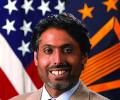
Vikram J Singh, the highest-ranking Indian American at the Pentagon is quitting his administration job to head up the national security division at the Center for American Progess -- a Washington, DC progressive think tank with close links to President Obama -- which has at its helm another Indian American, Neera Tanden.

The jury is still out on whether the Obama-Sharif summit managed to repair the trust deficit and mutual suspicions. But if pleasantries and cordiality was the measure of this summit, it receives a resounding A+ grade, says Aziz Haniffa

'There is little appetite in the Democratic foreign policy establishment to pick a fight with India.'

On Thursday, November 6, the Washington Post newspaper reported that controversial American diplomat, Ambassador Robin Raphel, had her office and home searched by the FBI. This most unusual development likely raised much cheer at India's ministry of external affairs, in whose flesh Raphel had been a thorn through much of her tenure in the first Bill Clinton administration in the early and mid-1990s by her anti-India and pro-Pakistan stand. Seventeen years ago, as she was about to step down as Assistant Secretary of State for South Asian Affairs, Raphel granted an exclusive interview to Aziz Haniffa and India Abroad, the leading Indian-American weekly newspaper, which is now owned by Rediff.com The July 1997 interview, which provoked a raging controversy in both capitals, Washington, DC and New Delhi, is reproduced here...
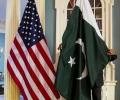
The legislation, the National Defense Authorisation Act-2019, gets rid of the certification requirements for Pakistan's action against the Haqqani Network and it also gets rid of the authority to reimburse Pakistan for counter-terrorism.

'... For the India-US relationship to continue its positive trajectory, it will require India to adapt to a different approach.' Nisha Desai Biswal -- who as the Obama administration's point person for South Asia was in the inner circle of all the Obama-Modi Summits -- tells Rediff.com's Monali Sarkar why she is hopeful that India and the US are on an irreversible forward course.
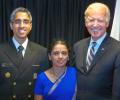
It is also for the first time ever that so many Indian-Americans have been roped into a presidential administration ever before the inauguration. Biden, a Democrat, is still quite far away from filling all the positions in his administration.

From being on the verge of war and violence, West Asia has actually got a sudden reprieve. Seema Mustafa explains

The President was apparently unaware of the Narendra Modi visa ban controversy till April. Aziz Haniffa/Rediff.com has the scoop.

This is the joint statement issued by the ministry of external affairs on the visit of US President Barack Obama to India.

The dinner Jill Biden and her husband US President Joe Biden hosted for Indian prime minister Narendra Modi, June 22, at the White House brought together, Indians and Americans from so many firmaments.
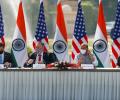
Henry Kissinger once said, 'It may be dangerous to be America's enemy, but to be America's friend is fatal.' India will have to wait and see, observes Rajeev Srinivasan.

'The real test will be in defence-related deals, for instance the Javelin anti-tank missile: Is the US willing to co-develop something with India, on terms that will support the 'Make in India' initiative? Is there defence technology transfer? Or will it dump old junk on India?' asks Rajeev Srinivasan.

'The question remains: Was the Obama visit truly a success? Only the future will tell us if the "breakthrough" in the nuclear liability issue will concretise into electricity.' 'As importantly, it will be interesting to watch how India's relations with China will evolve in the months to come.'

The United States is looking forward to a "very substantive and consequential" visit by Prime Minister Narendra Modi to Washington later next month and is working on a "pretty ambitious roadmap" for his bilateral meeting with President Barack Obama, a top American official said.

'Progress demands regular senior-level attention from American leaders.' 'A leaders' summit is great, but we need sustained engagement to continue to forge new agreements and find new areas of cooperation.'
We see none of the euphoric build-up customary to India's encounter with US presidents in recent times. This gives Modi wriggle room to work on the much-needed reset of India-US ties.

The start of Indian lobbying in the US can be traced back to Pakistan's anti-India lobbying. Policy wonk Ashok Sharma documents this journey and its catalytic role in transforming the US-India relationship.

Moving ahead with their new mantra -- Chalein Saath Saath: Forward Together We Go -- Prime Minister Narendra Modi and United States President Barack Obama on Tuesday vowed to deepen cooperation in every sector for the benefit of global stability and people's livelihoods over the next ten years.

'The diplomat's arrest has led to a major diplomatic spat, the likes of which I have not seen in my nearly three decades of covering the US-India relationship, says Aziz Haniffa. 'The knee-jerk reaction by the powers-that-be in Delhi was myopic to say the least.'

With Donald Trump the appeal has to be to his business instincts in which his personal interests seem to play a significant role, says former foreign secretary Kanwal Sibal.

The 'Missing link in India's Act East Policy', as India's former foreign secretary Shyam Saran calls it, needs to be filled sooner rather than later, says Dr Rahul Mishra.

Recognising the threat posed by outfits like the Al Qaeda, Lashkar-e-Tayiba and the Dawood Ibrahim network, India and the United States have agreed to deepen cooperation in fighting terrorism and asked Pakistan to bring to justice the 2008 Mumbai attack perpetrators.
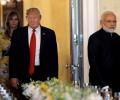
'China was the elephant in the Oval Office and Trump would have sensed that Modi's foreign policy architecture has become disoriented sans the US' pivot to Asia,' points out Ambassador M K Bhadrakumar.

The joint statement issued after Prime Minister Narendra Modi and President Barack Obama's first-ever summit is high on intent and ambition. Notably missing from the statement is India's refusal to be America's partner in its war against ISIS.
'The threat that India faces and the threat the United States faces is not just to the homeland, but to our people and to our institutions wherever they may be.' In an exclusive conversation with Aziz Haniffa/Rediff.com, US Assistant Secretary of State Nisha Desai Biswal outlines the importance of Prime Minister Modi's visit for America.

'The past year has yielded extraordinary results in the strategic, commercial, and people-to-people components of the India-United States partnership, US Ambassador to India Richard Rahul Verma tells Aziz Haniffa/Rediff.com in an exclusive interview.

India needs to have a re-look of whole gamut of its relations with major powers and also prepare for a more turbulent neighbourhood. But such is the tyranny of Indian status quo mindset that any talk of re-look at nuclear doctrine or foreign relations is treated as blasphemy, says Colonel (retd) Anil Athale.

'What was predictable, but entirely missed by Modi's strident critics, is that the excessive and intemperate demonisation of Modi allowed him to assume his own metaphor -- the underdog, the martyr, the marginalised,' says Dr Aseem Shukla.
The kind of people Narendra Modi has chosen, the decisions he has taken and the rail and central budgets suggests that he is treading carefully in New Delhi. There is less of innovation and more of continuity, so far. He is not ready to rock the boat and start from scratch, says Sheela Bhatt.

It emerges that not only does the CIDR project fails the test of fairness, justness and reasonableness besides the test of not being fanciful, oppressive or arbitrary; it also fails the test of Arthashastra, Hadith and the Bible.

The announcement of the formation of the BRICS bank will have as much an impact about how the non-G7 countries manage their economies and their foreign reserves, as it does on the intellectual discourse. The development priorities and agenda which was hitherto set by western experts responding mostly to western priorities and notions will now have to compete with an intellectual tradition that is and can be very different, says Mohan Guruswamy.
